
Watch a faster style of yoga class and the postures arrive and leave quickly, one flowing into the next without much pause between them. It looks dynamic and feels like progress. Cover a lot of ground and the session feels productive.
Traditional Hatha Yoga works differently. The postures arrive and then stay for a while. The body settles into a shape and the instruction shifts from how to get there to what to do while you are there. For someone new to this approach it can feel slower than expected. But the slowness is the point and understanding why changes how the whole practice feels.
Hatha Yoga asanas are not designed primarily for flexibility or performance. They are designed to create a particular quality of experience, one where the body holds steady, the breath moves freely and the mind has something real to settle into. This article looks at why that matters and what it actually develops over time.
Understanding the Role of Hatha Yoga Asanas
In traditional Hatha Yoga each posture is understood as more than a physical position. It is an opportunity to observe how the body is responding, how the breath is moving and what the mind is doing while both of those things are happening.
Yoga philosophy describes the purpose of an asana as sthira sukham – steadiness and ease held together. Not rigidity and not collapse but something in the middle that requires genuine attention to find and maintain. Hatha Yoga asanas in the traditional sense are built around this principle. The posture isn’t complete when the shape is achieved. It’s complete when steadiness and ease are present within it.
This shifts the whole orientation of practice. Instead of moving toward a posture and immediately moving on the practitioner is asked to stay and observe. What happens to the breath? Where is unnecessary tension being held? Can the effort settle without the posture falling apart? These are the questions that traditional Hatha Yoga is actually asking and they can only be answered by remaining in the posture long enough to notice.
Why Holding Yoga Poses Matters
The difference between passing through a posture and actually staying in it is greater than it might seem.
When the body moves quickly through yoga asanas it often relies on momentum rather than genuine stability. The joints and muscles don’t have time to adjust properly and the breath tends to get ignored in favour of keeping up with the pace. The posture is completed technically but the depth of experience it could offer simply doesn’t have time to develop.
Holding yoga poses long enough for the body to settle is how a Hatha Yoga practice builds real understanding. In the first few seconds of a posture the body is still arriving – adjusting weight, finding balance, managing the initial effort of getting there. It’s only after that initial phase that the more interesting work begins. Muscles start to release tension they were holding unnecessarily. The breath finds a steadier rhythm. The mind stops managing the transition and starts actually inhabiting the present moment.
This is why a Hatha Yoga practice structured around holding postures with awareness often feels more demanding than faster styles not because the shapes are harder but because the quality of attention required is higher.
Stillness Creates Better Awareness
Staying in a posture doesn’t mean becoming passive. It means shifting from doing to observing.
Once the body has settled into a shape there is suddenly room to notice things that movement tends to obscure. Is the breath shallow? Is one side of the body gripping more than the other? Is the effort in the right place or has it migrated to somewhere that wasn’t designed to carry it? These are small observations but they are exactly the kind of self-observation that builds genuine body awareness over time.
Posture awareness developed this way becomes an internal sense not a checklist of rules applied from the outside but an honest feel for what the body is actually doing and whether it’s working well or compensating. That sense develops gradually through repeated practice and it doesn’t develop through speed.
Progress Is Measured by Awareness, Not Difficulty
A common assumption in yoga is that advancing means attempting harder postures. In traditional Hatha Yoga the understanding is different.
Progress shows up as a steadier breath in a posture that once felt effortful. It shows up as the ability to remain for longer with genuine ease rather than gripping through. It shows up as the quality of mental steadiness that develops when the body is held in something challenging and the mind learns not to react. These changes are real and they accumulate but they are built through consistent practice in familiar postures rather than through constant escalation toward more difficult ones.
The Importance of Alignment and Breath in Every Posture
Yoga alignment is often taught as though it means looking a certain way, arms at a specific angle, feet exactly parallel. But alignment in the traditional sense is functional rather than aesthetic.
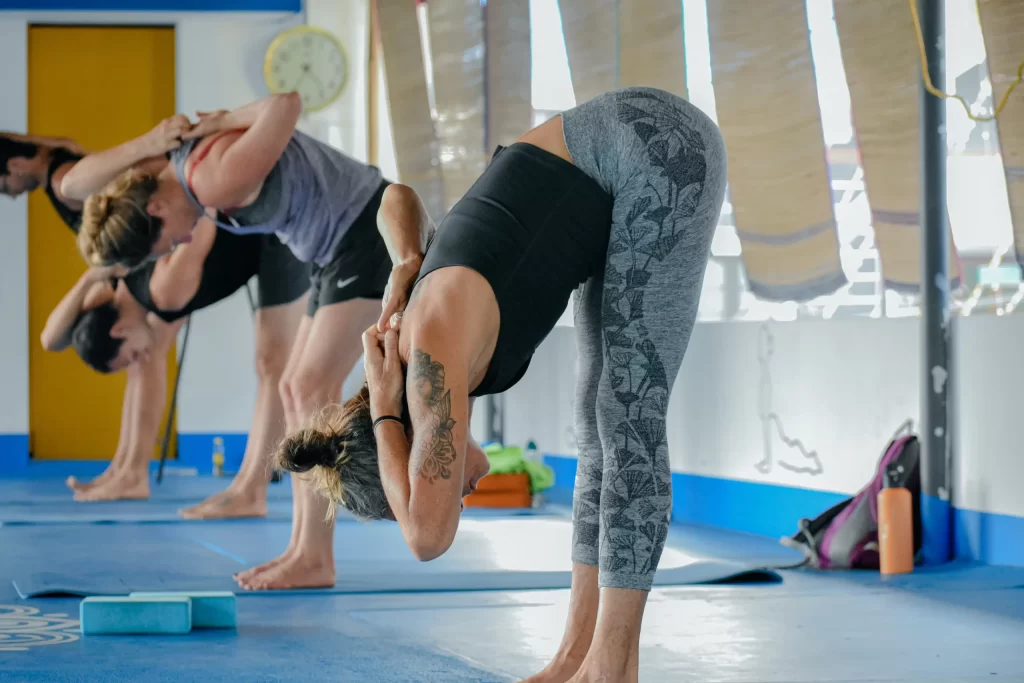
Good yoga posture alignment means the body is in a position where the joints are stable, the muscles are working in a balanced way and the breath can move without restriction. It’s not about matching an ideal shape from the outside – it’s about the body being arranged in a way that actually supports what the practice is asking of it. That arrangement looks different in different bodies and it changes as strength and awareness develop over time.
Breath awareness is what connects alignment to practice in a meaningful way. When the breath shortens or disappears in a posture it’s a signal that the body has been taken further than it can support with genuine stability. When the breath moves freely and evenly throughout the posture it confirms that what’s happening is sustainable rather than forced. Learning to use the breath as this kind of honest feedback is one of the most practical things a traditional yoga practice teaches.
Alignment principles understood this way become less about precision and more about honesty. Is the body in a position it can actually sustain while breathing well? If not then something needs adjusting not because it looks wrong but because it isn’t working properly.
How Holding Asanas Supports a Sustainable Yoga Practice
One of the Hatha Yoga benefits that practitioners notice over time is that the practice becomes more reliable rather than more complicated.
For Hatha Yoga for beginners especially this matters. Slower practice with held postures allows time to understand what a posture actually involves before moving to variations or progressions. Confidence builds through familiarity rather than through attempting things before the body has the awareness to manage them well. This is a more sustainable path than chasing difficulty that builds a practice that can continue to develop for years rather than one that peaks quickly and then stalls.
Holding postures also builds focus in a way that faster practice doesn’t require. Staying present in something challenging without moving away from it is a skill and it develops through practice. Over time that skill extends beyond the mat. The ability to remain calm and observant in a difficult moment rather than immediately reacting is something that regular practice in held postures quietly builds.
This is what makes traditional Hatha Yoga more than a physical routine. The steadiness practised on the mat begins to show up as steadiness in ordinary life not through philosophy but through the simple accumulation of having practised being still and attentive many times before.
The Posture Is the Teacher
Hatha Yoga asanas held with genuine attention offer something that no amount of fast movement can – the experience of remaining present with what is actually happening rather than always moving toward the next thing.
The purpose of staying in a posture isn’t to endure it or to prove something. It’s to practise the quality of awareness that traditional yoga has always valued more than any particular shape. When the body is steady, the breath is free and the mind is genuinely present within a posture – even a simple one – that’s where the practice is actually happening.
Progress measured this way doesn’t require advanced poses or long sessions. It requires honesty and repetition. And it tends to keep deepening long after the shapes have become familiar.
At Pranam Yoga Joseph in Varkala, Kerala,Hatha Yoga asanas are taught the way they were always meant to be slowly, honestly and with real attention to breath, alignment and awareness. If what you have read here reflects the kind of practice you have been looking for, the next step is simply to come and experience it.