
In most fitness-oriented classes, Surya Namaskar gets treated as a warm-up, something to move through quickly before the “real” practice begins. In traditional Hatha Yoga, that framing misses most of what the sequence is actually doing.
What Surya Namaskar Actually Means
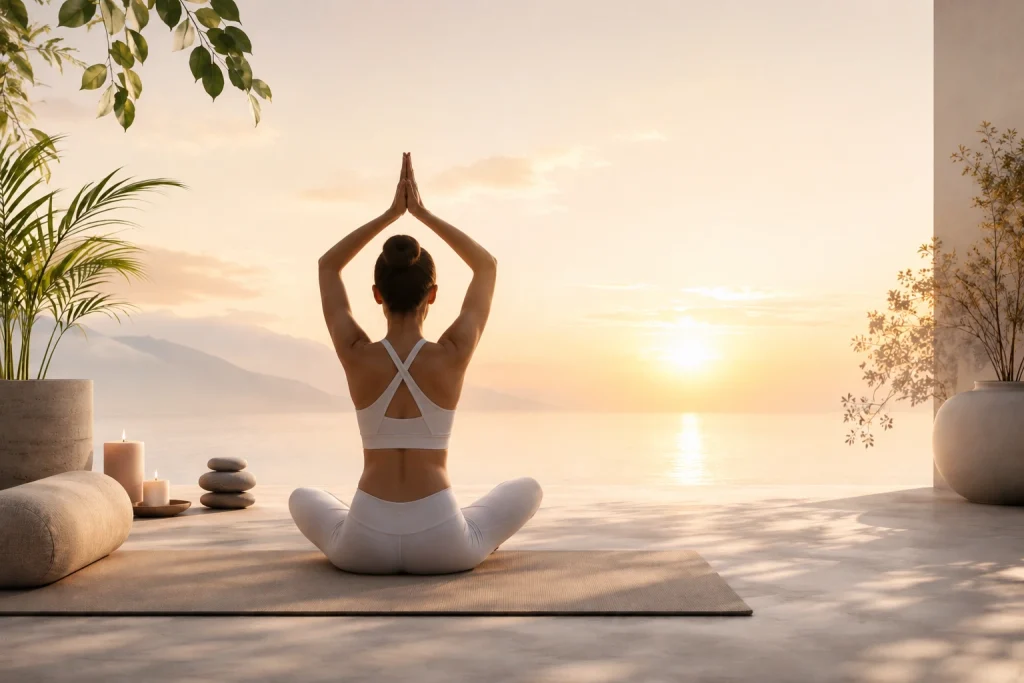
Surya Namaskar translates roughly to “sun salutation,” a sequence of postures traditionally practised at sunrise, facing the sun, as a gesture of respect and a way of greeting the new day.
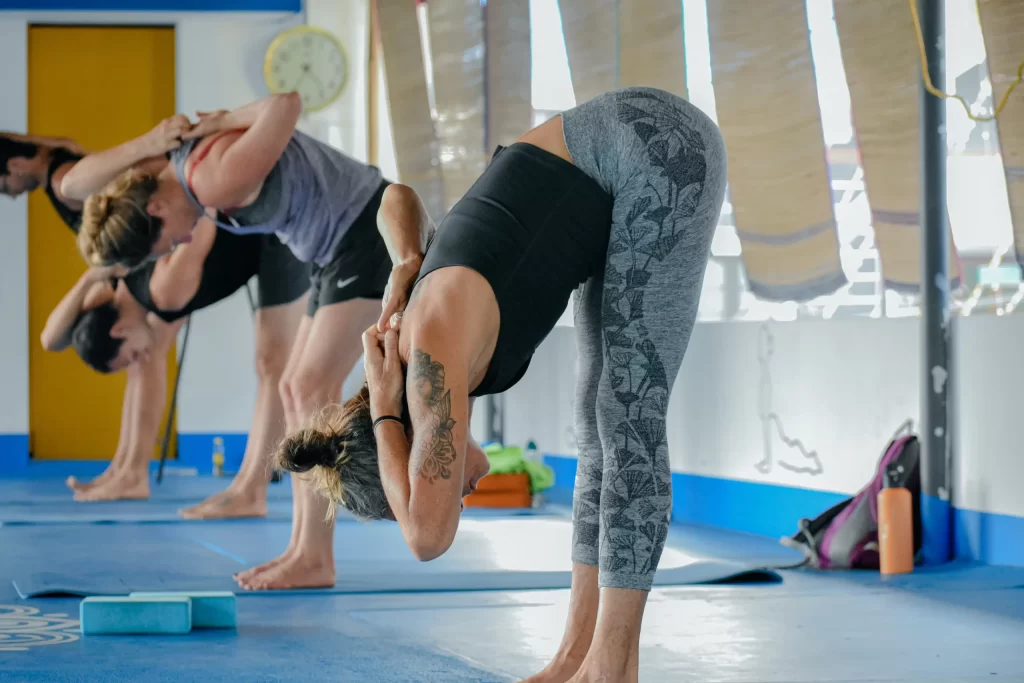
Structurally, it’s a linked sequence of asanas, moving through forward bends, plank-like positions, and gentle backbends in a continuous, breath-coordinated flow. In its classical form, it’s not a random string of movements. Each posture connects to the next through a specific breath pattern.
Breath Is the Actual Structure, Not the Movement
This is the part most modern, fast-paced versions lose entirely. In a traditional practice, every movement in Surya Namaskar is paired with either an inhale or an exhale, deliberately and consistently.
Forward folds are typically paired with an exhale, backbends with an inhale, following the body’s natural tendency to expand on the inhale and contract on the exhale. When this pairing is respected, the sequence stops being a physical warm-up and becomes something closer to a moving pranayama practice.
Why It’s Traditionally More Than a Warm-Up
Because Surya Namaskar touches nearly every major muscle group and joint in a single sequence, it’s traditionally considered a complete practice on its own, not merely preparation for something else. Some traditional approaches build an entire practice session primarily around repeated, mindful rounds of Surya Namaskar.
This doesn’t mean it can’t also function as a warm-up before deeper asana work. It just means reducing it to only that role overlooks a lot of what the sequence was designed to offer.
Practising It With Attention Rather Than Speed
A fast-paced Surya Namaskar, repeated quickly for a cardio effect, is a legitimate modern adaptation, but it’s a different practice from the traditional version. Traditionally, each movement is held long enough to actually complete the breath fully, rather than rushing the breath to match the pace of the movement.
This is a good example of something Hatha Yoga asks for consistently: the same physical shape, practised at a different pace, becomes an entirely different experience internally.
Learning Classical Surya Namaskar at Pranam Yoga Joseph
Classical Surya Namaskar is taught as part of the asana curriculum in our 200 Hour Yoga Teacher Training in Varkala, Kerala, with close attention to breath-movement coordination rather than pace. If you’d like to understand more about how breath and body awareness connect more broadly in this tradition, our article on understanding yoga anatomy is a useful next read.
FAQ
What is Surya Namaskar?
Surya Namaskar, or Sun Salutation, is a traditional sequence of linked yoga postures, practised with coordinated breath, traditionally performed facing the rising sun.
How many steps are in a classical Surya Namaskar?
Classical versions typically involve around twelve distinct postures, though the exact count and sequence can vary slightly between traditions and teachers.
Is Surya Namaskar a warm-up or a complete practice?
It can serve as either. Traditionally, it’s often considered a complete practice on its own, capable of engaging the whole body and breath, though it’s also commonly used to prepare the body for deeper asana work.
How is breath coordinated with each movement in Surya Namaskar?
Forward-bending or contracting movements are typically paired with an exhale, and backward-bending or expanding movements with an inhale, following the body’s natural breathing pattern.
Conclusion
Once breath is genuinely part of the sequence, not an afterthought layered on top of it, Surya Namaskar stops feeling like a warm-up and starts feeling like exactly what it was designed to be: a complete practice in miniature.