


Best Time to Do Yoga: Morning vs Evening – What Actually Works for You
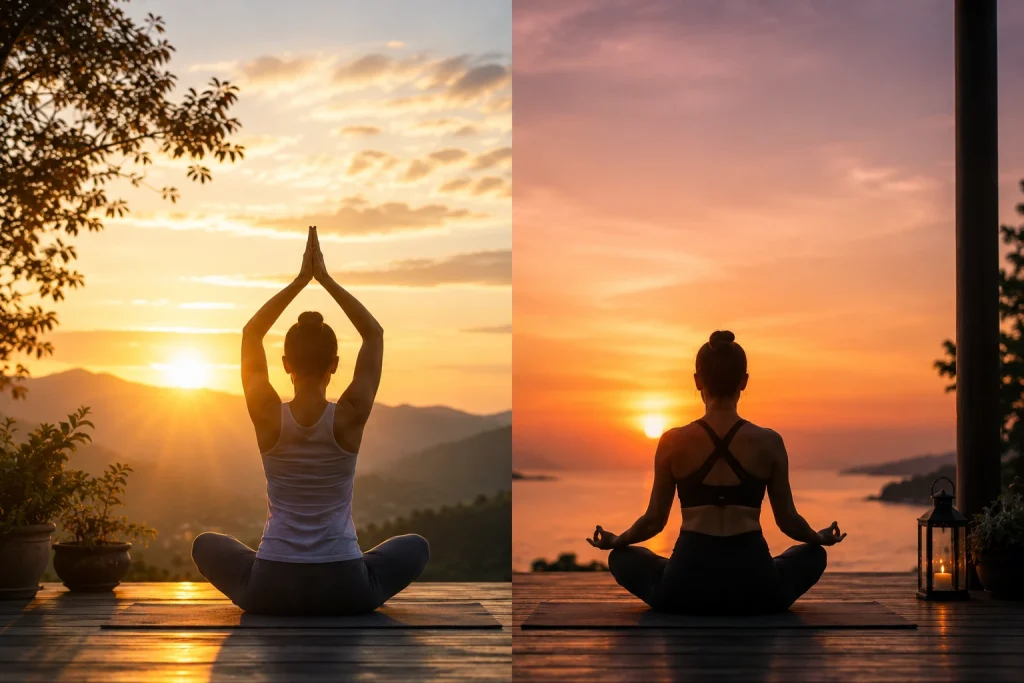
Morning vs Evening Yoga is a common topic among people trying to understand which time feels better for their body and mind. Every person’s body responds differently, and daily routine also plays an important role. Some people feel naturally active and fresh in the morning, while others feel more relaxed and flexible later in the day. Instead of forcing a strict schedule, it’s better to choose a time that feels natural and easy to follow regularly.
In traditional yoga practice, early morning has always been given a special importance. Many practitioners prefer the quiet time before sunrise, often known as Brahma Muhurta – roughly one and a half hours before sunrise. At this time, the surroundings are still, distractions are fewer, and the mind usually feels calmer. In yoga, this peaceful atmosphere is believed to support not only physical practice, but also breathing exercises, meditation, and deeper inner awareness.
What Happens When You Practice in the Morning
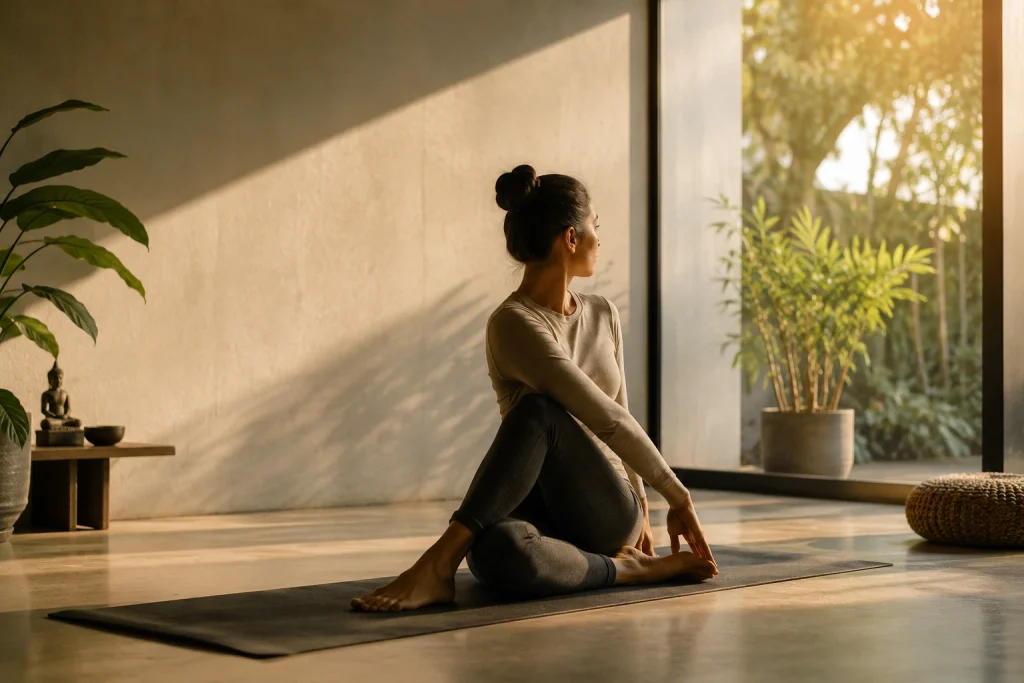
Morning practice often feels fresh, calm, and focused. Before the day becomes busy, the body feels lighter and the mind is usually clearer. This is the one reason that many people naturally enjoy morning yoga as part of their routine.
According to yoga philosophy, morning practice is not only connected with movement. It is also seen as a good time for simple breathwork, meditation, and mindfulness because the mind is less distracted. Even a short session in the morning can create a sense of balance that stays with you throughout the day.
For many people, mornings also make it easier to follow a steady daily yoga routine. Since there are fewer interruptions early in the day, practice often feels more disciplined and consistent. This is why some people prefer mornings for goals like morning yoga for weight loss or building healthier habits.
Morning practice usually suits people who enjoy quiet surroundings, mental clarity, and a more structured start to the day.
What Evening Practice Feels Like
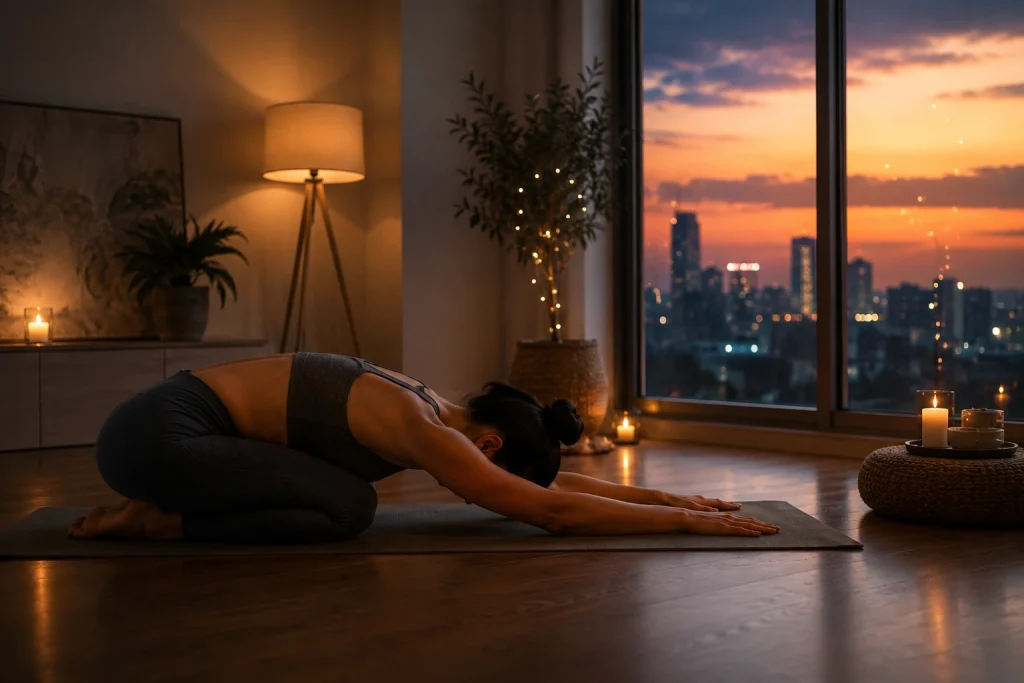
Evening practice has a completely different feel. By the end of the day, the body is already warm from movement and daily activity, so stretches may feel easier and smoother. This is where evening yoga becomes helpful for people who want to slow down and release tension.
Unlike morning sessions, evening practice is usually less about building energy and more about recovery. Slow movements and relaxed breathing can help the body settle after long hours of work, travel, or screen time. Many people also find evening sessions emotionally calming because they create a pause between the stress of the day and rest at night.
Rather than feeling highly disciplined, evening practice often feels softer and more restorative. It can help relax the nervous system and bring the body into a calmer state before sleep.
Evening sessions work well for people who want relaxation, flexibility, and a gentler way to unwind.
Morning vs Evening Yoga: The Real Difference
The real difference between morning and evening practice is not only about energy levels – it is also about intention.
Morning sessions usually feel more inward and focused. They often help build discipline, mental clarity, and a sense of freshness before the day begins. This is one reason traditional yoga practices were often done early in the morning when the environment felt quieter and more peaceful.
Evening practice, on the other hand, is more connected with release and recovery. It gives the body and mind time to slow down after constant activity. Instead of preparing you for the day ahead, it helps you let go of physical tension and mental fatigue.
If you’re wondering when to do yoga for best results, the answer depends on what you want from your practice. Some people practice mainly for physical health, while others value the mental calm and self-awareness yoga brings over time.
When it comes to the best time to do yoga for weight loss, mornings are often preferred because they support routine and consistency. But in reality, long-term results come more from regular practice than from choosing a specific hour.
Simple Way to Get Started
If you are new, there is no need to create a perfect routine immediately.Start with a simple and manageable practice. Even 15–20 minutes daily can feel more effective than doing long sessions occasionally.
The best way to start yoga is by choosing a time that feels realistic for your lifestyle. Once practice becomes natural, you can slowly explore different styles, breathing techniques, or meditation along with movement.
Over time, yoga becomes more than just exercise. Along with physical flexibility, many people notice better focus, calmer breathing, improved sleep, and a quieter state of mind. Both morning yoga benefits and evening yoga benefits become meaningful when practice is done with attention and regularity.
Simple Takeaway
Traditional yoga wisdom often leans toward early morning practice because of the calm atmosphere and clearer state of mind it offers. At the same time, modern lifestyles are different for everyone, and not every routine allows early mornings.
So instead of searching for one universal answer, it helps to think about your intention. If you want focus, structure, and inner clarity, mornings may feel more suitable. If you need relaxation, recovery, and emotional release, evenings may feel more supportive.
In the end, the best yoga schedule is not the strictest one – it is the one that helps you stay connected with your practice in a comfortable and meaningful way.
Yoga becomes more meaningful when practiced with the right guidance and consistency. To explore mindful yoga sessions and a more balanced approach to practice, visit Pranam Yoga Joseph