
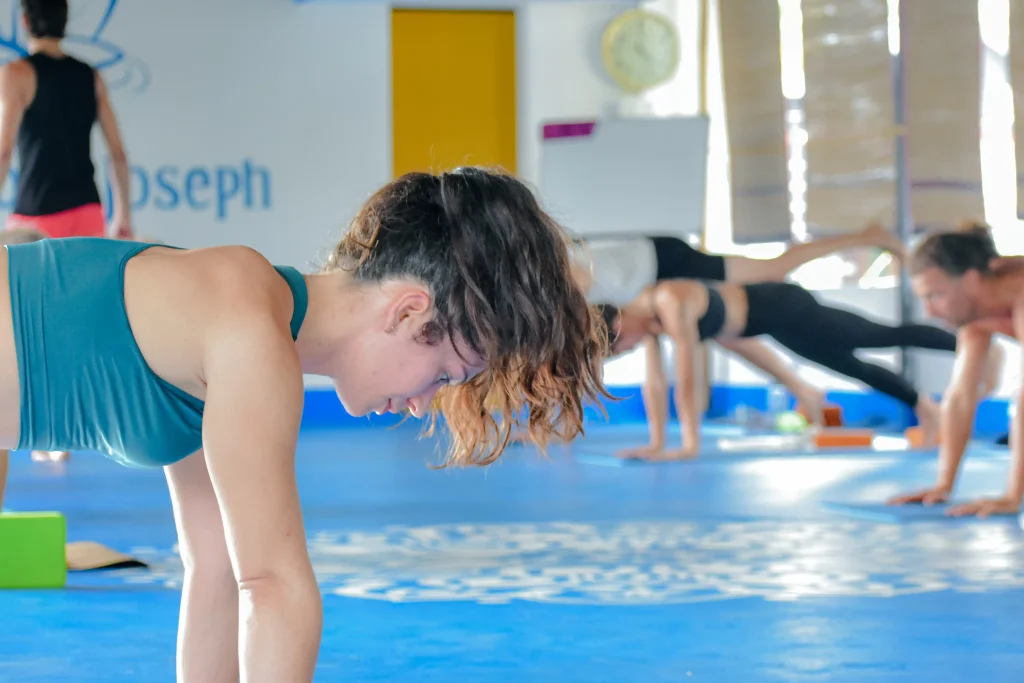
Asana gets most of the attention in yoga and understandably so. The postures are visible, tangible and easy to talk about. But traditional Hatha Yoga is considerably broader than its physical side suggests and two of its most important elements rarely get the space they deserve in modern classes.
Mudras and bandhas are practices that most students encounter for the first time either during a deeper personal practice or through a Yoga Teacher Training course. They sit alongside asana, pranayama and meditation in the traditional framework and their role is to support awareness, steadiness and internal focus rather than to add complexity for its own sake.
Neither mudras nor bandhas are techniques to rush into or collect quickly. In the traditional approach they are introduced gradually, in the right context and under qualified guidance because understanding when and why they are used matters as much as knowing how to perform them.
The Purpose of Mudras and Bandhas
Before looking at them separately it helps to understand what mudras and bandhas share in common.
Both are traditional yogic practices that belong to the internal dimension of Hatha Yoga is the side of practice that works with attention, breath and awareness rather than with movement and physical range. Neither is about achieving a visible result. Their purpose is more subtle than that: to create conditions within the body and mind that support deeper states of practice.
In traditional Hatha Yoga these practices were never taught as standalone techniques. They were introduced as part of a complete learning progression after the student had developed a stable asana practice and some genuine familiarity with breath awareness. That sequence exists for a reason. A student who hasn’t yet learned to observe the breath in a posture is not ready to work with more refined internal practices. The foundation has to come first.
What sets them apart from each other is the nature of what they do. Mudras work primarily with attention and meditative focus. Bandhas work with internal stability and the way the breath moves through the body. Together they complement the more visible aspects of practice in ways that develop over time rather than overnight.
How Mudras Support Awareness During Yoga Practice
The word mudra is often translated as gesture or seal. In practice mudras in yoga are most commonly associated with the position of the hands during seated practice and meditation, though they appear in other forms as well.
Their purpose is not decorative. Hatha Yoga mudras are traditionally used to encourage a particular quality of attention during practice. When the hands rest in a specific position during meditation or pranayama the gesture creates a subtle loop of focus that helps the mind settle rather than wander. It’s a small thing but in the context of a quiet sitting practice its effect is noticeable.
What is worth understanding is that mudras don’t create an experience by themselves. They support an experience that already has the right conditions – a settled body, a steady breath and a mind that is willing to stay rather than drift. This is why they are most meaningful when introduced alongside meditation and pranayama practice rather than taught as isolated hand positions.
Why Simplicity Matters in Mudra Practice
One mudra practised with genuine attention is worth considerably more than ten learned and cycled through without understanding.
The effectiveness of mudra practice comes from consistency and context rather than variety. A beginner who understands why a particular gesture is used during pranayama and practises it regularly in that setting develops something real. A beginner who learns a long list of mudra names without that context develops very little.
This is why in a traditional learning setting mudras are introduced slowly and meaningfully. The first ones introduced are simple and their relationship to the practice around them is explained clearly. Understanding when to use them and what quality of attention they are meant to support is the actual learning – the gesture itself is just the outer form of that understanding.
Understanding the Role of Bandhas in Traditional Hatha Yoga
Bandhas are internal techniques that work with the breath and with specific areas of the body. The word itself means lock or seal and bandhas in yoga involve a deliberate internal engagement that is coordinated with breathing practices.
There are three primary bandhas in traditional Hatha Yoga – Mula Bandha, Uddiyana Bandha and Jalandhara Bandha. Each associated with a different region of the body and introduced at different stages of practice. Energy locks in yoga as they are sometimes called work by directing and containing the breath’s movement in particular ways during pranayama and selected practices.
What they are not is something to apply forcefully or independently before the breath has been developed. Bandhas require a level of body awareness and breath control that takes time to build. A student who has spent real time learning to breathe steadily in asana and pranayama will find bandhas more accessible and more meaningful than one who attempts them without that foundation.
Why Bandhas Are Learned Gradually
The sequence in which bandhas are introduced in traditional training reflects how the body develops understanding.
Mula Bandha is the most foundational. It is usually introduced first because it relates to a region of the body that is already engaged subtly in standing and seated practices. Uddiyana Bandha requires an empty breath and a particular internal action that needs clear instruction and some practice to perform correctly. Jalandhara Bandha involves the neck and throat and is most commonly used in specific pranayama practices where its timing matters considerably.
Attempting bandhas before the breath is steady tends to create effort and confusion rather than the stability and awareness they are designed to support. Proper guidance helps students understand the timing, the breath phase and the level of engagement appropriate for where they are in their practice, which is why qualified instruction matters here more than in most areas of yoga.
How Mudras and Bandhas Work Together With Pranayama
In traditional Hatha Yoga these three elements are pranayama, mudras and bandhas. They are not treated as separate practices. They belong to the same layer of the teaching and are usually introduced in relation to one another rather than in isolation.
Pranayama and mudras often appear together because both work with the quality of attention during breath practice. A specific hand position during alternate nostril breathing for example isn’t only a technical instruction, it also supports the focus and steadiness that makes the practice more effective. The mudra and the pranayama technique serve each other.
Pranayama and bandhas are introduced together because bandhas work directly with the breath and with the pause between an inhale and an exhale or with the action of an exhale itself. Applying a bandha at the wrong point in the breath cycle or with the wrong level of engagement can disrupt the breath rather than support it. Understanding the relationship between them comes from practice and clear instruction not from reading about them alone.
| Practice | Primary Purpose | Usually Introduced With |
| Mudras | Encourage focus and meditative awareness | Meditation, seated practice, pranayama |
| Bandhas | Develop internal stability and breath awareness | Pranayama and traditional Hatha Yoga practices |
The reason these practices work well together is that they address different aspects of the same quality: the ability to remain present, stable and attentive during practice. Mudras support the mind. Bandhas support the breath. Pranayama provides the field in which both operate. Together they create conditions that individual practice alone doesn’t fully offer.
Why These Practices Are Best Learned Through Guided Training
Mudras and bandhas can be read about and understood intellectually. But the understanding that matters in practice feels sense of when they are working and when they are not. It develops only through direct experience with a teacher who has practised them for long enough to explain them from the inside.
This is part of what a Yoga Teacher Training offers that self-directed study cannot. In a structured training environment these practices are introduced at the right point in the learning progression, with explanation of both their purpose and their place in the broader traditional framework. Students don’t just learn the technique, they learn the context that makes the technique meaningful.
This approach also prevents the most common misunderstanding about mudras and bandhas, that they are advanced or esoteric additions to a practice that is otherwise complete without them. In traditional Hatha Yoga they are not additions. They are part of the practice’s original architecture and they belong in the learning from the appropriate stage onward.
Part of the Same Foundation
Mudras and bandhas are not separate from Hatha Yoga. They are part of what Hatha Yoga actually is when it is taught in its complete traditional form.
Their value doesn’t come from performing many techniques or from reaching advanced variations quickly. It comes from understanding their purpose, practising them in the right context and allowing them to deepen gradually as the rest of the practice matures around them. Learned this way – step by step, with experienced guidance, they enrich every other aspect of practice in ways that are quiet, real and lasting.
At Pranam Yoga Joseph in Varkala, Kerala – mudras, bandhas and pranayama are taught as part of a complete traditional learning progression not as extras but as integral elements of the practice. If you would like to learn them within that context explore our programmes here: