
Most people prepare for yoga teacher training by worrying about the wrong things. They wonder whether they are flexible enough, or whether they can already hold a headstand. Neither of those decides how your course goes. What helps far more is arriving with a steady daily practice, a body used to early mornings, and the practical side of travel already handled.
This guide sets out how to prepare for yoga teacher training in the six weeks before you arrive. It is written for students joining our 200-Hour Yoga Teacher Training in Varkala or 100-Hour course, but most of it applies to any traditional Hatha Yoga training.
Why the Weeks Before Your Training Matter
A 200-hour training at Pranam Yoga Joseph runs for 25 days. Each day includes two asana classes, pranayama, philosophy, teaching methodology or anatomy, and an evening meditation or Yoga Nidra session. That is a full schedule, and it repeats day after day.
Students who arrive rested and already practising regularly settle in within a few days. Those who arrive straight from a hectic job, jet-lagged and out of practice, often spend the first week simply recovering. A little preparation means you spend your training learning, not catching up.
Six Weeks Before: Build a Steady Daily Practice
Our 200-hour course does not ask you to be advanced. It does ask for a basic familiarity with asanas and at least a few months of regular practice. The six weeks before you leave are the time to turn occasional classes into a daily habit.
Practise little and often
Thirty to forty-five minutes every day prepares you better than two long classes a week. Consistency teaches your body what daily practice feels like, which is exactly what the training asks of you. If you need a structure, our guide to building a home yoga practice explains how to keep it going.
Learn the foundations, not the hardest poses
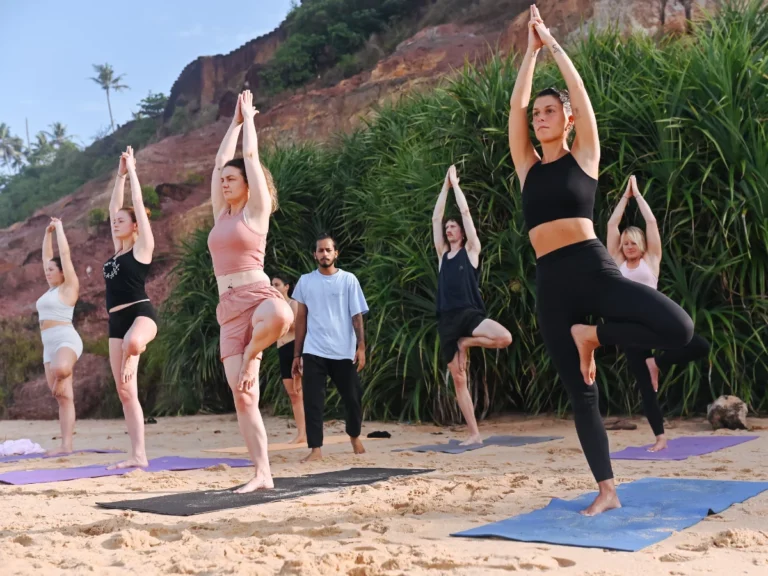
Focus on the postures every Hatha class returns to: Surya Namaskar, standing poses, simple forward bends, gentle backbends and seated postures. Practise holding them for several slow breaths rather than moving quickly between them. In traditional Hatha Yoga, postures are held with stillness and attention, and getting used to that before you arrive makes the first classes much easier.
Don’t chase flexibility
Trying to force deeper stretches in the weeks before a course is one of the most common ways students arrive injured. Work within a comfortable range and let flexibility develop on its own. Our article on what happens when you stop chasing difficult poses explains why this approach works better over time.
Five Weeks Before: Start Your Visa and Travel Plans
International students need a valid Indian visa and a passport with at least six months of validity remaining. Most visitors apply for an Indian e-Tourist Visa through the official Indian e-Visa portal. We recommend applying at least two to three weeks before arrival, so starting the paperwork five weeks out leaves room for any delays.
The nearest airport is Trivandrum International Airport (TRV), about 40 to 45 km south of Varkala. Cochin (COK) is around 200 km north, with direct trains to Varkala Sivagiri station. Our Visa and Travel Guide covers routes, documents and arrival in more detail, and our team can help you plan airport transfers.
If you are flying long-haul, consider arriving a day or two before the course starts. A short buffer gives you time to recover from the journey and adjust to the time difference before the first 6:30 AM class.
Four Weeks Before: Shift Your Daily Rhythm
Training days start early and finish after the evening meditation. Changing your routine gradually now is much kinder than changing it overnight in India.
- Wake up earlier. Move your alarm 15 to 20 minutes earlier each week until you are waking around 6:00 AM. Practise in the morning whenever you can.
- Go to bed earlier. Early starts only work with early nights. Aim to be asleep by 10:00 PM in the final two weeks.
- Eat a lighter, simpler diet. All meals at the school are vegetarian, freshly prepared and served three times a day. If you eat heavily or rely on processed food, start moving towards simple vegetarian meals now.
- Reduce caffeine and alcohol gradually. Cutting both suddenly on arrival can bring headaches and poor sleep in the first days of training.
Three Weeks Before: Add Breath, Stillness and a Little Reading
Begin a short pranayama practice
Spend five to ten minutes a day on simple breath awareness and slow, even breathing. You do not need to learn advanced techniques before the course; your teachers will introduce them step by step. Our guide to pranayama in Hatha Yoga is a useful overview of what you will study.
Get comfortable sitting still
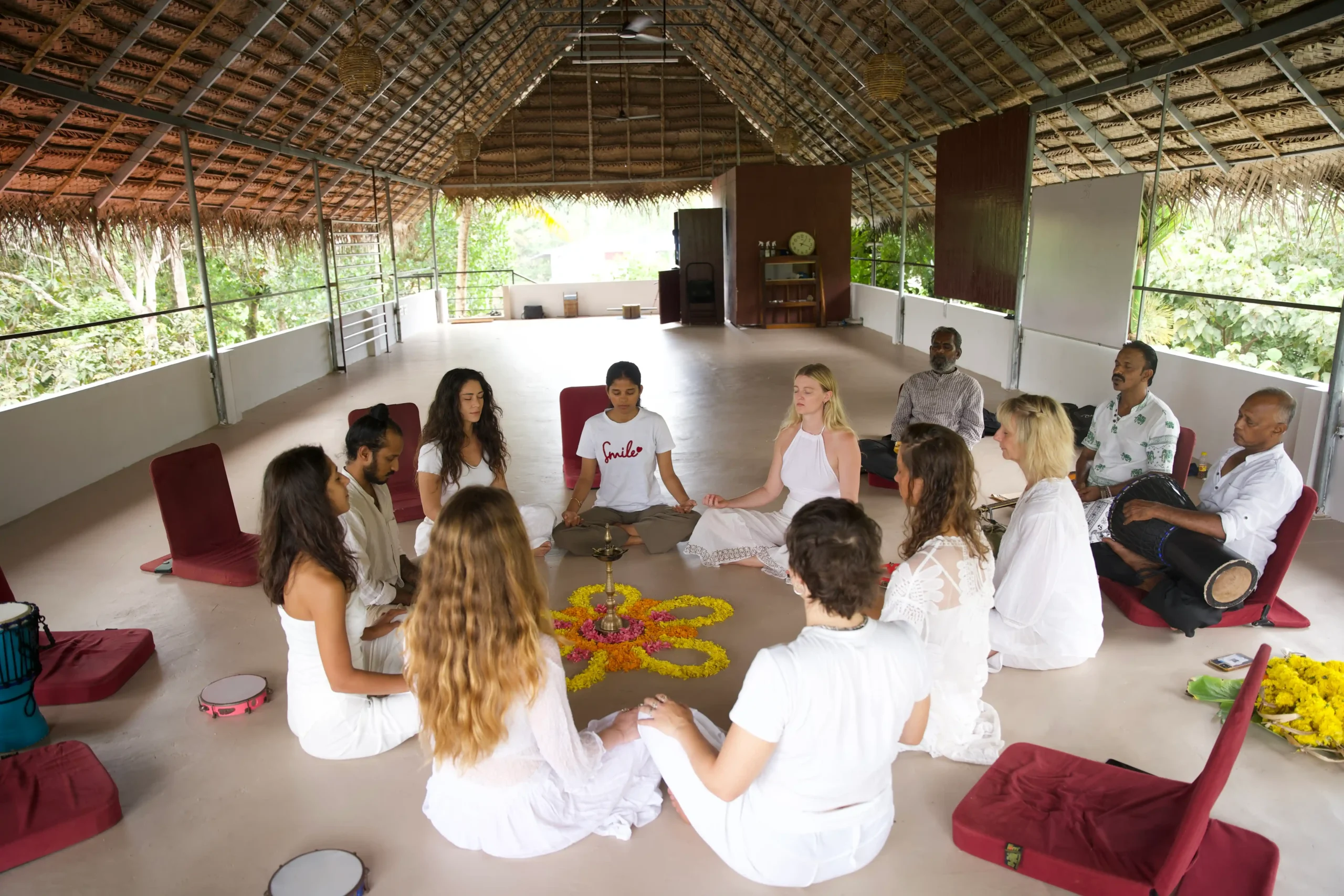
Pranayama, philosophy and meditation all involve sitting for long periods. Practise sitting cross-legged on a cushion for 10 to 15 minutes each day, and use support under your hips or knees if you need it. A short daily sit also gives you a feel for the traditional meditation techniques taught on the course.
Read, but don’t overload yourself
A little background makes philosophy and anatomy classes easier to follow. Two good starting points are the 8 limbs of yoga from Patanjali’s Yoga Sutras and the basics of yoga anatomy. Read slowly and note any questions to bring to class. There is no need to memorise anything before you arrive.
Two Weeks Before: Pack and Prepare Your Documents
Kerala’s coastal climate is warm and humid, and you will practise twice a day. Pack light, breathable clothing and keep your practice wear modest.
- Practice clothes in breathable cotton or quick-drying fabric, enough for two sessions a day
- Modest, loose clothing for the town and for temples, covering shoulders and knees
- A light layer or shawl for early mornings and evening meditation
- A notebook and pen for philosophy, anatomy and teaching methodology classes
- A refillable water bottle, sun protection and insect repellent
- Any personal medication, with a copy of your prescription
- Printed copies of your passport photo page, approved e-Visa and booking confirmation
Rooms include a private bathroom with hot water, clean bedding, towels and Wi-Fi. You can read more about the rooms and food on our Rooms and Facilities page.
The Final Week: Rest and Set an Intention
Ease off in the last few days before you travel. Keep your practice gentle, sleep well and avoid trying to fit in extra intense classes. You want to arrive feeling fresh, not sore.
It also helps to write down why you are doing the training. Some students want to teach; others want to deepen their own practice. Neither is better, but knowing your reason makes the demanding days easier. Tell your teachers about any injuries or health conditions before the course begins, so they can suggest modifications from the first class.
What a Training Day Looks Like
Knowing the daily rhythm in advance helps you prepare your body and energy. This is the daily schedule for our 200-hour course:
| Time | Session |
|---|---|
| 6:30 to 8:00 AM | Asana class or teaching technique |
| 8:00 to 8:50 AM | Pranayama |
| 9:30 AM | Breakfast |
| 11:30 AM to 12:30 PM | Philosophy |
| 1:00 PM | Lunch |
| 2:30 to 3:30 PM | Teaching methodology (Mon, Tue) or Anatomy and Ayurveda (Thu, Fri, Sat) |
| 4:00 to 5:45 PM | Asana class |
| 6:15 to 7:00 PM | Meditation or Yoga Nidra |
| 7:15 PM | Dinner |
For a closer look at how the first days feel, read what to expect in your first week of yoga teacher training in Varkala.
Your Six-Week Preparation Checklist
- Six weeks out: practise for 30 to 45 minutes every day, focusing on foundational Hatha postures.
- Five weeks out: apply for your e-Visa and book flights to Trivandrum (TRV) or Cochin (COK).
- Four weeks out: start waking earlier, eat simpler vegetarian meals and cut back on caffeine and alcohol.
- Three weeks out: add 5 to 10 minutes of breath practice and 10 to 15 minutes of sitting each day.
- Two weeks out: pack, print your documents and confirm your arrival plans with our team.
- Final week: rest, keep practice gentle and write down your intention for the training.
Frequently Asked Questions
Do I need to be flexible to join yoga teacher training?
No. Flexibility develops through steady practice, and the training teaches you how to work safely with different bodies, including your own. What matters more is a regular practice and a willingness to learn.
How much yoga experience do I need before a 200-hour course?
For our 200-hour course, you should have at least a few months of regular practice and a basic familiarity with asanas. If you are newer to yoga, ask us whether our 100-hour teacher training, a shorter 12-day course, is a better first step.
What if I fall behind on my preparation?
Do what you can. Even two or three weeks of daily practice and earlier mornings make a noticeable difference. Groups are small, with a maximum of 12 students, so teachers can support you wherever you are starting from.
Ready to Begin?
Good preparation is simple: practise daily, shift your routine gradually, sort out your travel early and arrive rested. If you are planning your training, see the upcoming course dates, explore the 200-Hour Yoga Teacher Training in Varkala, or send us your application with any questions about getting ready.